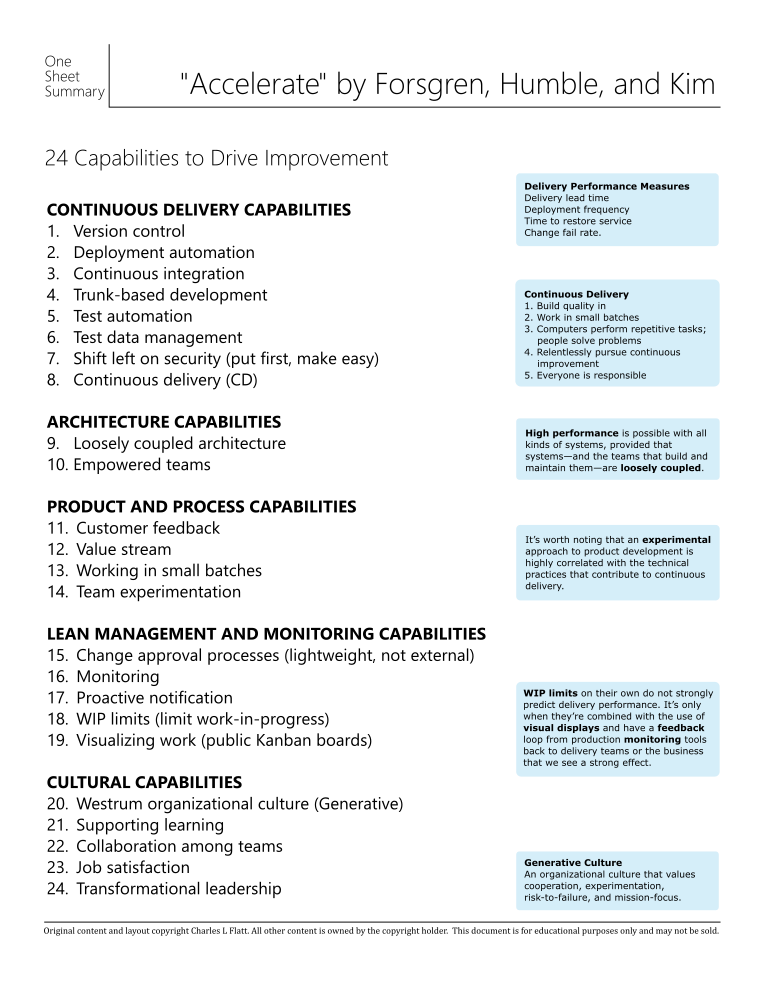
One Sheet Summary: "Accelerate: The Science of Lean Software and DevOps"
2020-10-12 18:15
I make these to post on my wall and help me learn the subject. Be sure to read the book!

Comment for me? Send an email. I might even update the post!
2020-10-12 18:15
I make these to post on my wall and help me learn the subject. Be sure to read the book!
2020-10-05 15:55
_dynamics_of_group_problem_solving/images/monopoly.jpg)
_dynamics_of_group_problem_solving/images/lee-van-cleef.png)
Mitigation: "We're providing an update, but we're open to ideas."
_dynamics_of_group_problem_solving/images/right-wrong-way.jpg)
Mitigation: "We'll start with those, and review with you if we come across alternatives."
_dynamics_of_group_problem_solving/images/sherlock.jpg)
Mitigation: "Can we look at your steps/tests/code? We want to perform due dilligence."
_dynamics_of_group_problem_solving/images/corn-maze-aerial.jpg)
Mitigation: "I'd like to understand better. Who can step me through what you've done?"
_dynamics_of_group_problem_solving/images/160129-elderlyexercise-stock.jpg)
_dynamics_of_group_problem_solving/images/wallendas.png)
_dynamics_of_group_problem_solving/images/library.jpg)
2020-08-23 22:47
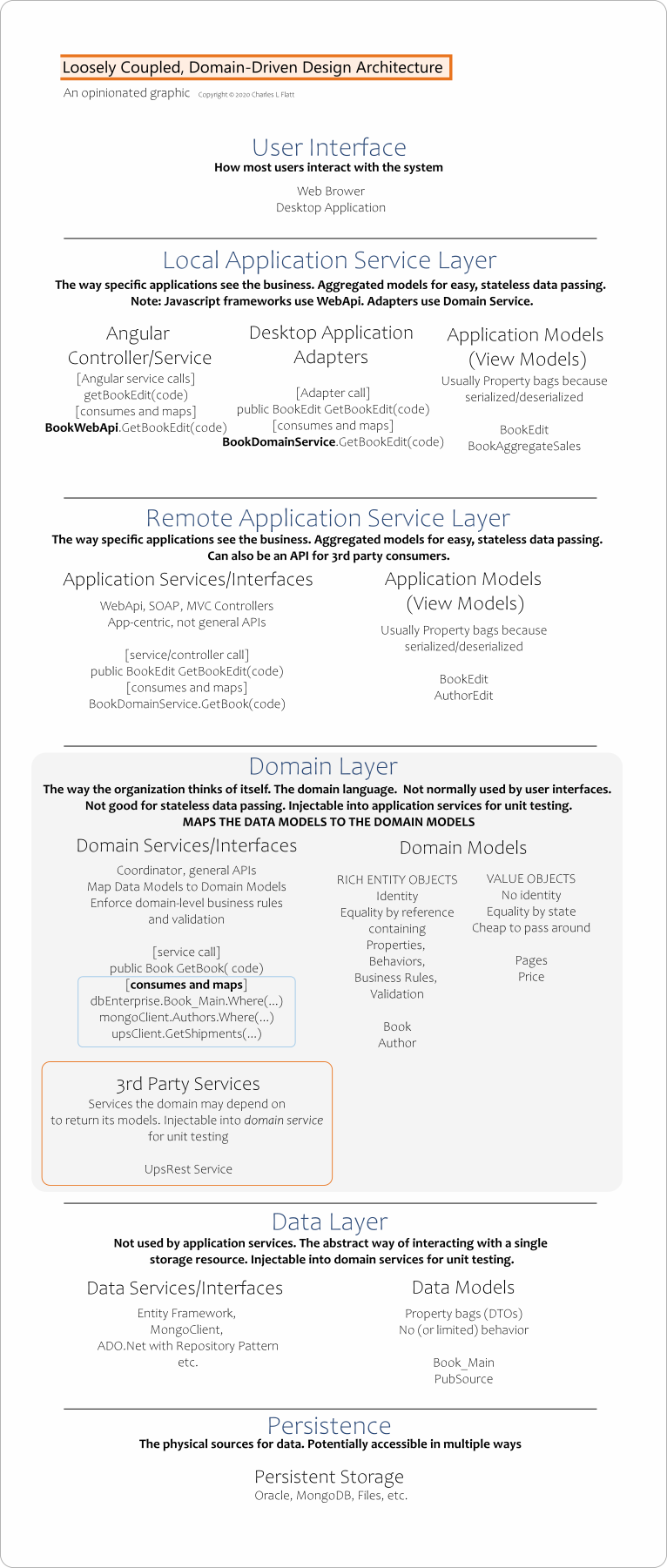
The DDD implementations I've seen in tutorials tend to leave out a couple of things.
Applications get domain information two different ways. Javascript frameworks call WebApis. But desktop apps can use the domain services directly, avoiding the performance waste of an extra call. Think of the WebApi as a passthrough (façade) to the domain service.
Domain models <> Data models. The domain layer--critically--takes care of mapping data to domain. Consider that your domain models may be populated from multiple data sources, or multiple tables from a single database . . . or both.
Loosely-Coupled Domain-Driven Design Architecture